Address
3080 Rio Road
Carmel, CA 93923
United States

Founded:
June 3, 1770 - The 2nd California Mission
Also Called:
Mission Carmel - During the mission era the mission's official name was San Carlos Borroméo de Monterey (after its original location).
Current Status:
This is an active Roman Catholic Church designated a Minor Basilica in 1961 by Pope John XXIII.
Summary:
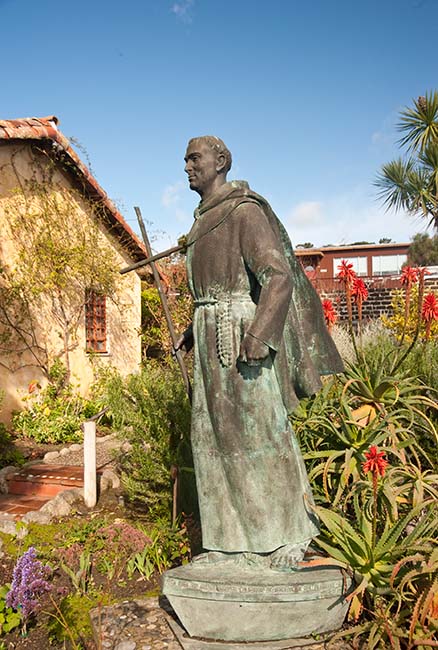
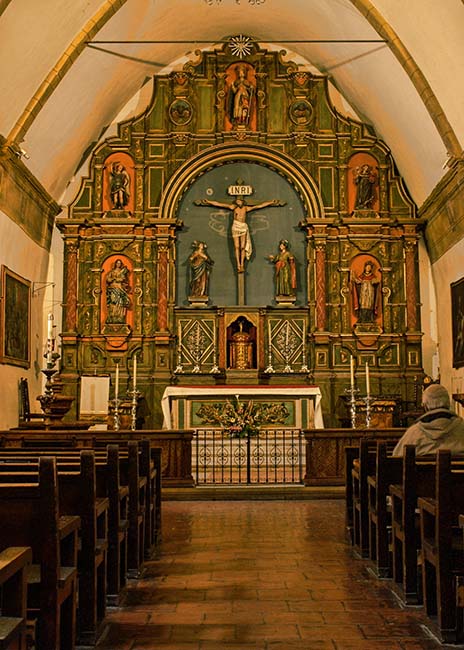
San Carlos Borromeo de Carmelo, headquarters of the California missions, was founded on June 3, 1770. The stunning Mission Carmel church was completed in 1797. This mission contains a great deal of significant art and original artifacts. The Serra Memorial Cenotaph (sculpted by Jo Mora in 1924) is a special attraction.
3080 Rio Road
Carmel, CA 93923
United States
The mission is about three (3) miles south of Monterey, reached via Highway U.S. 1. After passing the turn for Carmel by the Sea, as the road descends into the Carmel Valley, turn right on Rio Road. The mission is 6/10ths of a mile on the left.
831-624-3600 - Gift Shop/Mission
831-624-1271 - Church Rectory
Please contact the mission directly by telephone or by visiting the mission website for the most current information.
Due to Covid-19 restrictions, it is best to check for current information.
The Parish publishes extensive information on the requirements for and scheduling of weddings on their mission website.
1834
1859
Saint Charles of Borroméo, a 16th century Italian cardinal.
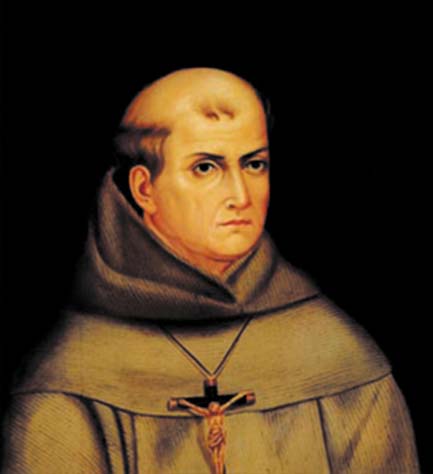
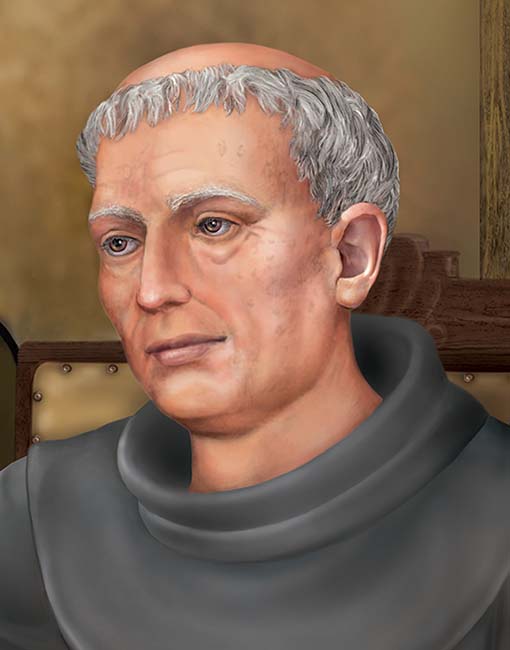
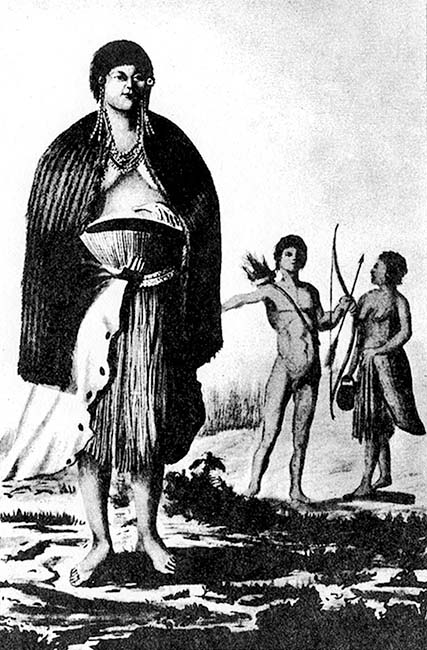
The Rumsen tribelet (of the Costanoan family) and the Esselen were the principal groups whose members joined this mission. Other Costanoans (called Costeños or coast people by the Spanish) included the Sargantroc, Guachirron, and Kalendaruc.
Originally established at the presidio in Monterey but relocated in 1771 to the Carmel Valley on a hillside that was "two gunshots" from the ocean. The mission was a relatively primitive series of buildings until the current church was completed in 1797.
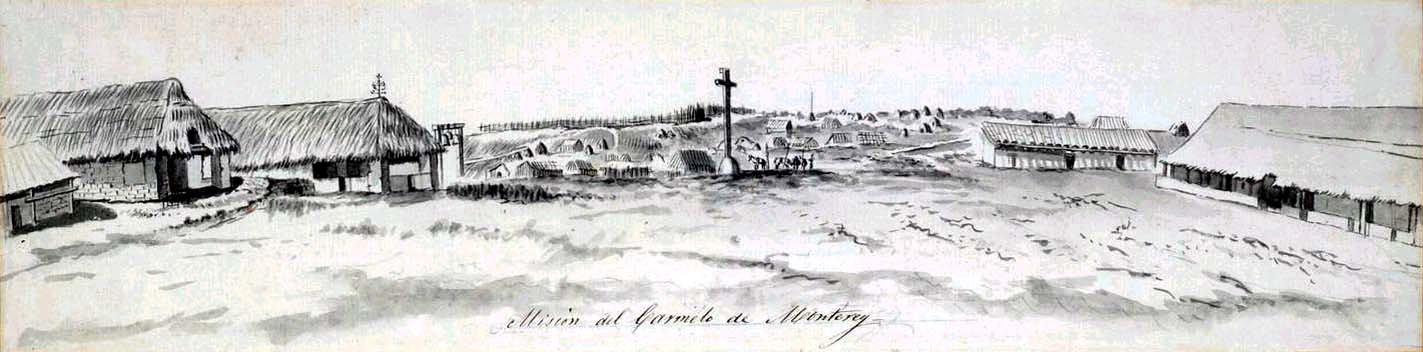
An irregular shaped quadrangle. Only the ruins of the church remained standing when restoration began so extensive excavation of the old foundation was required to determine the precise layout of the mission.
A zanja or aqueduct and nearby springs that once fed the mission fountain and lavanderia or washbasin supply the water.
The highest recorded population was 876 in 1795.
San Carlos Borroméo de Carmelo had one of the smaller livestock herds: 2,100 cattle and 3,300 sheep in 1832. The mission's best livestock years were in the first decade of the 19th century when the herd ranged between 8-10,000.

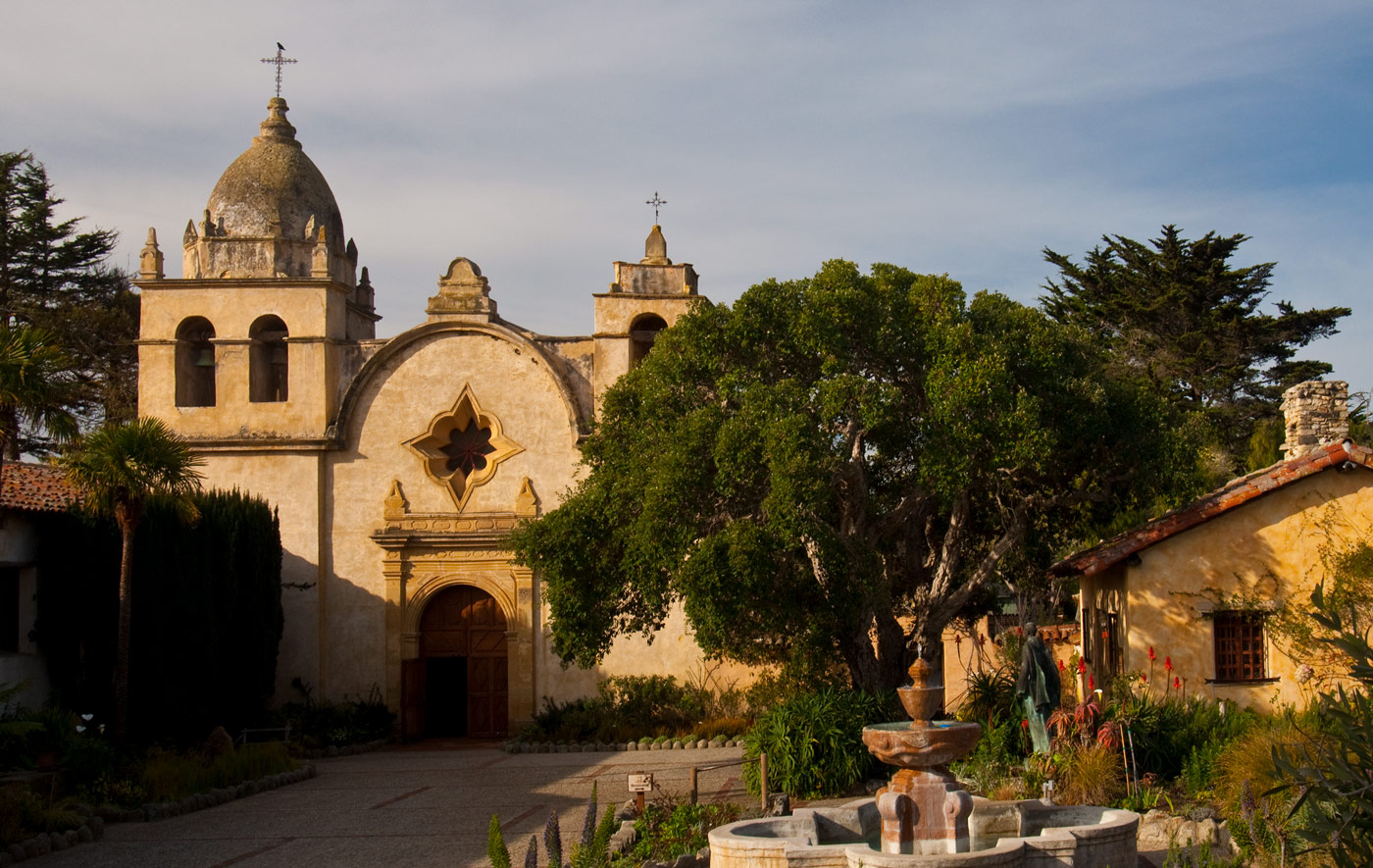
The stunning Carmel Church (the seventh Carmel Church) was completed and dedicated in 1797. Indian laborers under the direction of master stonemasons Manuel Esteban Ruiz and Santiago Ruiz quarried the sandstone for the church. The walls are five feet thick at the base.
After the mission era, San Carlos Borroméo was largely abandoned. The roof of the church collapsed in 1851. In 1884 a pitched shingle roof was added, marring the once graceful roofline. In 1936 the roof was rebuilt to its original roofline.
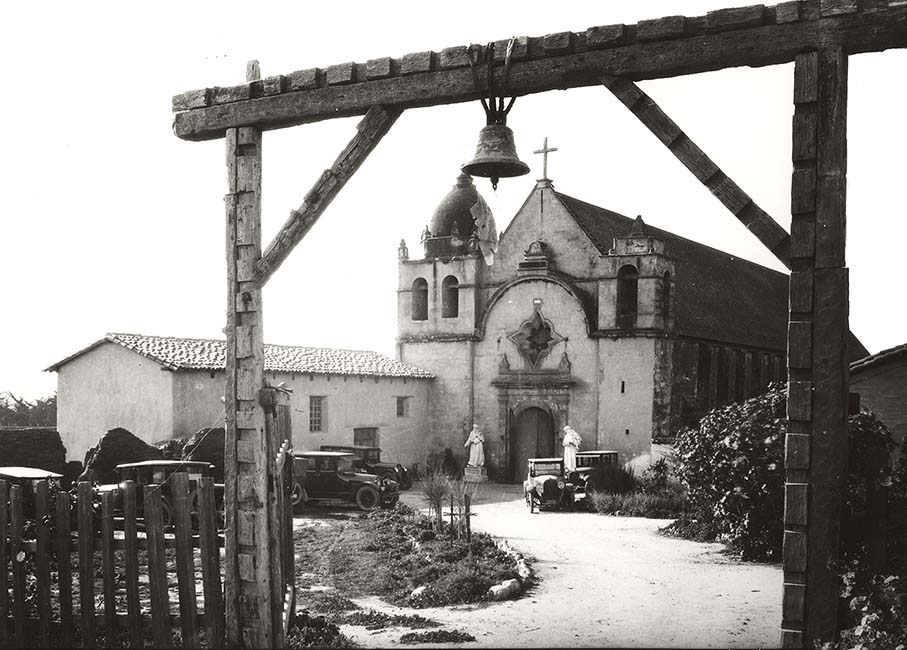
There are two dissimilar bell towers, one with a Moorish-style dome. The largest tower holds nine bells, most of which are original. There is an outside staircase to the tower.
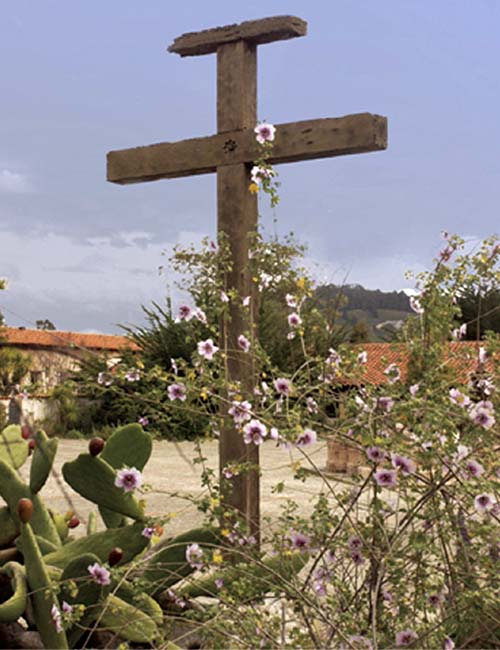
Mission Carmel is filled with significant art and original artifacts. One of the most notable mission era attractions is a large wooden cross in the quadrangle, recreated on the site where fragments of the cross erected by Fr. Serra were discovered during the restoration of the mission.
In 1818 Hippolyte de Bouchard, an Argentine privateer, attacked and burned Monterey. The Carmel Mission was evacuated but it was not harmed.
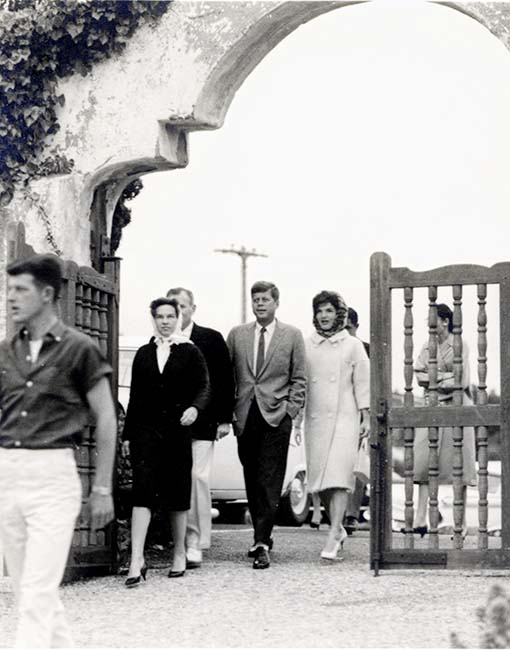
Mission Carmel, which was called San Carlos Borroméo de Monterey during the mission era, fell into ruin in the last half of the 19th century. The noted mission restorer, Sir Harry Downie, guided the mission restoration for almost five decades.
As the headquarters of the California Missions, located near the major port of San Francisco, Mission Carmel was frequently illustrated in paintings, drawings, lithographs, and early photographs. The earliest artistic renditions we have of a California mission show early stages of the Carmel Mission.
The Historical Image Gallery displays a generous sample of the large body of work that exists of this special mission.


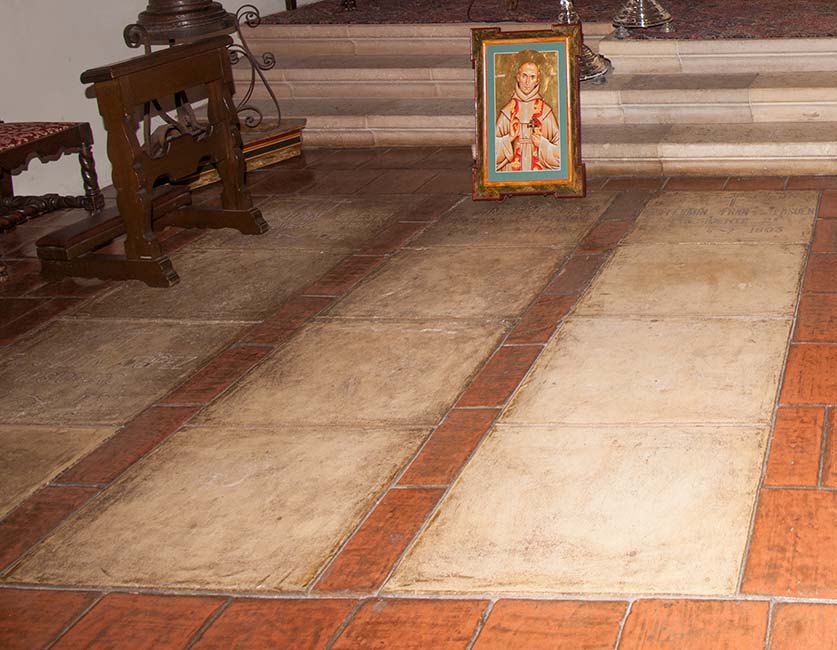
The Contemporary Image Gallery contains more recent photographs taken by several different photographers from around the Church gardens and the Church interior.


San Carlos Borroméo (popularly called Mission Carmel) has a long, complex history. The current church, which was dedicated in 1797 (twenty seven years after the mission was founded) was the seventh Carmel Church. After being secularized in 1834, the mission was largely abandoned and in 1853 the roof of the church collapsed. While there were partial restorations in 1884 and 1924, the original curved roof was not replaced until 1936.
While we have an authentic layout of mission grounds (done by the U.S. Land Office in 1854) and other useful drawings, there were no detailed architectural drawings made of the Mission Carmel Church by the Historical American Buildings Survey.


